Skip to content





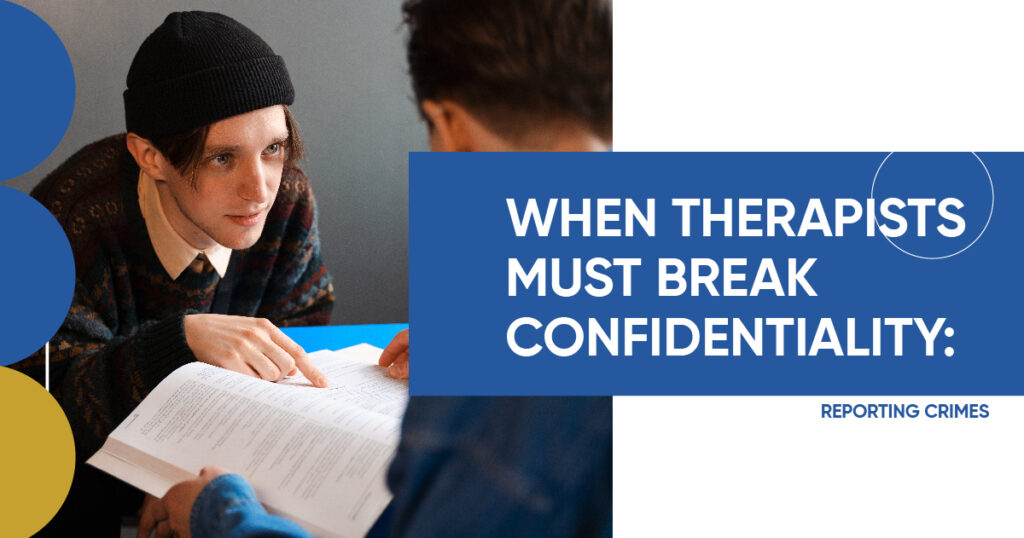
Can therapists report crimes? It is one of the most frequent questions posed by people before the beginning of the therapy. It is a natural thing to worry about. Therapy is supposed to be a non-threatening, non-public area, a place where you can talk without worrying about repercussions. In fact, confidentiality is one of the pillars of the therapist-client relationship. However, as is the case with a lot of principles of ethics, it has limits.
The knowledge of when therapists have a legal or an ethical obligation to disclose confidentiality may make you feel better informed, powerful, and safe when you are seeking mental health services. This blog discusses the therapist-client privilege and mandatory reporting, duty to warn, and balancing client privacy with legal requirements, particularly in the U.S. legal system.
Can Therapists Report Crimes? Understanding the Legal Landscape
The answer to that is yes, but not automatically. Everything a client says can not be reported freely by therapists. Strict confidentiality is, in fact, the default rule in mental health care. There are certain conditions, however, in which reporting laws compel therapists to take action.
Both ethical standards and state and federal legislations protect confidentiality. These safeguards are in place to ensure that clients feel free to talk openly about thoughts, actions, and experiences without fear of being criticized or exchanging information.
The Foundation of Therapist-Client Privilege
The therapist-client privilege is a legal concept that safeguards client-counselor communication. This privilege usually implies:
- Confidentiality of therapy information is ensured.
- The information cannot be disclosed without your permission to the therapist.
- Most legal inquiries are shielded against therapy notes and conversations.
Nonetheless, there is nothing definite in the therapist-client privilege. It provides exceptions and state laws in case of threats to the public safety or vulnerable people. The definition and use of these exceptions are very clear and limited.
Duty to Warn: When Confidentiality Has Limits
The duty to warn is considered one of the most famous exceptions to confidentiality. This is a legal and ethical responsibility that mandates therapists to act when the client is a credible threat of serious harm to self or others.
The responsibility to warn was based on the landmark case of Tarasoff v. Regents of the University of California, which established a duty for mental health professionals to protect identifiable victims against credible threats.
Therapists might be required in cases of duty-to-warn to:
- Notify potential victims.
- Contact law enforcement.
- Institute emergency interventions.
- Set up hospitalization where necessary.
Notably, this is not the case with ambiguous thoughts, historical behaviors, and imaginary conversations. The danger is to be specific, imminent, and believable in clinical judgment.

Mandatory Reporting Requirements Every Client Should Know
In addition to the duty to warn, there are mandatory reporting laws for therapists. According to these laws, some professionals, such as therapists, are obliged to disclose some forms of harm or abuse, compromising confidentiality.
Laws of mandatory reporting usually cover:
- Child abuse or neglect.
- Elderly or dependent adult abuse.
- Continuous or imminent damage to vulnerable groups.
In such cases, therapists have no free hand. Reporting is legally mandated once some criteria are fulfilled, even though it might have an impact on the therapeutic relationship.
State-by-State Variations in Reporting Laws
Different states have different reporting laws, and this implies that what a therapist would report in Texas would be considered slightly different in another state. Nonetheless, there are some fundamental principles across the country.
An overview of the general differences in reporting laws is simplified below:
| Area of Law | Common Across States | Varies by State |
| Child abuse reporting | Yes | Definitions and timelines |
| Duty to warn | Yes | Scope and method |
| Past crimes | Usually no | Rare exceptions |
| Adult abuse | Often yes | Who qualifies as vulnerable |
| Threats of violence | Yes | Reporting procedures |
All licensed therapists have a background of training in the laws of their state on reporting, and they are also updated on any changes so as to be able to be thoughtful.
How Therapists Balance Client Privacy with Legal Obligations
One of the most complicated things about mental health practice is balancing confidentiality and the law. The therapists have ethical obligations towards the privacy of their clients as well as ensuring no harm is done.
As a matter of fact, this balance entails:
- Risk clinical evaluation.
- The least invasive intervention is possible.
- This involves reporting the least amount of information, which is required by law.
- Onward support and encouragement for the client.
Where there is a need to report, the therapists strive to maintain trust by being willing to be open whenever it is possible. A number of them will clarify the reporting requirements at the start of therapy to avoid future surprises.
Ethical Guidelines That Shape Therapist Decision-Making
In addition to the law, therapists also adhere to stringent ethical standards mandated by official organizations, such as the American Psychological Association (APA) and the American Counseling Association (ACA), as well as state licensing boards.
These ethical theories include:
- Respect for client autonomy.
- Client privacy protection.
- Nonmaleficence (not harm).
- Beneficence (an act that is in the best interest of the client).
Therapists can frequently be expected to balance conflicting duties when making ethically based decisions. As an example, the need to maintain secrecy against the danger of severe injuries. In such instances, therapists consult codes of ethics, supervisors, and legal counsel to act responsibly.
Dallas Mental Health Is Here to Support You
If you have ever feared speaking with a therapist because of concerns about confidentiality, you are not alone, and your questions are legitimate. Transparency, trust, and ethical care are key values at Dallas Mental Health.
Clinicians at Dallas Mental Health go to the extent of explaining confidentiality, the reporting laws, and your rights as a client, so that you can feel safe and informed even during the first session. The therapy must be a place of truth, development, and healing.
You can find support if you seek kind mental health care. Learn more or contact us today at Dallas Mental Health.

FAQs
What Types of Crimes Are Therapists Legally Required to Report?
Child abuse, elder or dependent adult abuse, and credible threats of serious harm are also typically known to be the required reports that must be reported by therapists. The majority of crimes committed in the past cannot be reported unless there is a continued threat.
How Does the Duty to Warn Affect What I Share in Therapy?
The duty to warn is only applicable to the occurrence of a specific and imminent threat to a specific, identifiable individual. General thoughts, feelings, or behaviors in the past are normally private.
Can a Therapist Break Confidentiality Without My Consent?
Yes, but on the condition of certain legal or ethical duty, like the mandatory reporting or the duty to warn. These are circumstantial and well-spelt out in law.
What Happens If a Therapist Reports Something I Said?
The therapist will normally only give out the required information to relevant authorities. They can also assist you therapeutically all the way through.
Are There Situations Where Therapist-Client Privilege Is Absolute?
No. Although the level of confidentiality is high, it does not mean it is absolute. There are exceptions in order to be safe and in order to act within the law.