Skip to content





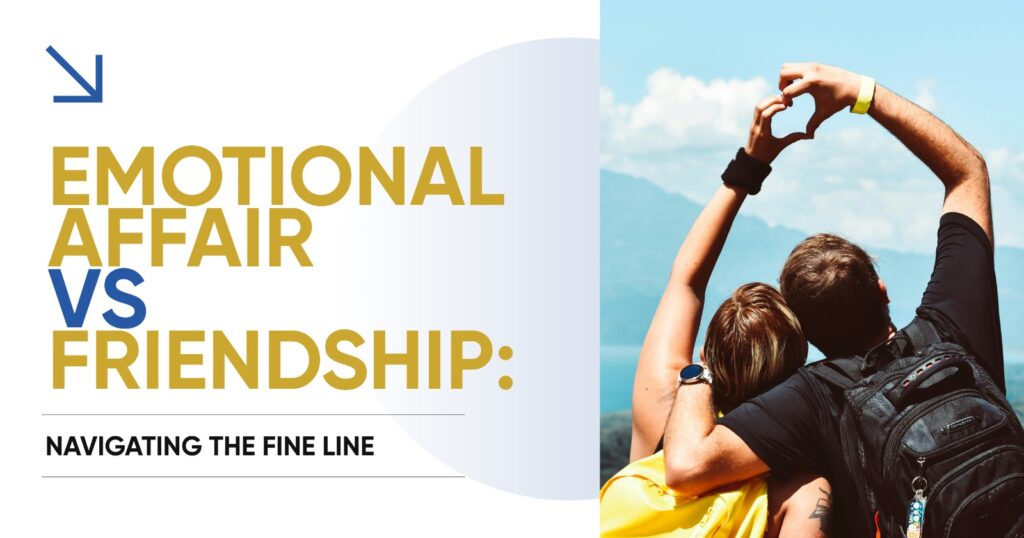
According to relationship studies from the American Psychological Association, nearly 45% of adults report forming close emotional connections outside their romantic relationships that occasionally cause tension or confusion. These bonds aren’t always inappropriate — but sometimes, what begins as a harmless friendship can slowly evolve into emotional intimacy that rivals or replaces the connection shared with a partner.
Understanding the delicate balance between emotional affair vs friendship isn’t just about loyalty — it’s about emotional health, boundaries, and honesty. The line can be fine, but recognizing it is essential for maintaining trust and balance in relationships.
Defining Emotional Connection in Relationships
Emotional connection is the invisible thread that binds two people together. It’s built through shared vulnerability, empathy, and understanding — the feeling that someone “just gets you.” Whether in romantic partnerships or close friendships, emotional closeness gives life richness and meaning.
However, when emotional connection becomes exclusive, secretive, or emotionally charged, it can blur into territory that threatens relationship trust and stability.
Why Emotional Closeness Matters in Both Friendships and Partnerships
Healthy emotional closeness is foundational to all relationships. In friendships, it nurtures support and mutual growth. In romantic relationships, it deepens intimacy, safety, and belonging.
The challenge arises when emotional energy meant for a partner is redirected elsewhere. For instance, sharing personal struggles or seeking validation from someone outside the relationship can create emotional displacement — where closeness with one person slowly undermines closeness with another.
Here’s a brief comparison illustrating how emotional connection can shift between friendship and an emotional affair:
| Aspect | Healthy Friendship | Emotional Affair |
| Transparency | Open, partner is aware | Often hidden or secretive |
| Intent | Supportive, non-romantic | Fulfills unmet emotional needs |
| Boundaries | Clear and respectful | Blurred and emotionally charged |
| Focus | Balanced with other priorities | Becomes emotionally consuming |
| Impact on Partner | Neutral or positive | Creates distance or jealousy |
Emotional intimacy is powerful — but without boundaries, it can cross lines no one intended to cross.
Navigating Trust Issues and Setting Healthy Boundaries
Trust is the heartbeat of any relationship. Once it’s shaken, emotional security weakens, and connection falters. Setting boundaries isn’t about restricting feelings — it’s about protecting the integrity of existing bonds.

When emotional connection outside a relationship becomes a substitute for emotional intimacy with one’s partner, it can spark misunderstandings, resentment, or even guilt.
Distinguishing Between Emotional Affair vs Friendship
So, where exactly is the line?
The difference often lies in intent, secrecy, and exclusivity.
- If you feel the need to hide conversations or minimize your closeness with someone, it’s a warning sign.
- If emotional support from another person feels more fulfilling than your partner’s, the dynamic may already be shifting.
- If your partner expresses discomfort and you respond defensively instead of reassuringly, trust boundaries may already be strained.
Healthy friendships can coexist beautifully with romantic partnerships, but only when communication and openness remain at the core.
Exploring Intimacy Boundaries Across Relationship Types
Emotional intimacy doesn’t always involve physical closeness. In fact, emotional infidelity often begins through small, seemingly innocent exchanges — private messages, late-night talks, or personal confessions.
The more one person becomes your primary emotional confidant, the more your partner is unintentionally replaced in that role.
Key Differences Between Platonic Bonds and Emotional Infidelity
It’s natural to form deep emotional bonds outside of romantic relationships. But emotional infidelity involves a level of emotional exclusivity and secrecy that threatens commitment and trust.
| Indicator | Platonic Relationship | Emotional Infidelity |
| Emotional Sharing | Supportive but balanced | Deep, private, and intense |
| Communication Frequency | Occasional and open | Constant and hidden |
| Thought Patterns | Appreciative but neutral | Idealization and obsession |
| Physical Attraction | Minimal or none | Often underlying or emerging |
| Impact on Partner Relationship | Strengthens support system | Creates emotional withdrawal |
According to relationship therapists, emotional infidelity can cause equal or greater distress than physical cheating because it undermines the emotional foundation of trust — the very core of intimacy.
Recognizing and Addressing Emotional Infidelity
Emotional infidelity doesn’t happen overnight. It’s a gradual slide — one text, one heart-to-heart, one “you understand me better than anyone” conversation at a time. Recognizing it early is crucial for healing and prevention.
Warning Signs That Emotional Support May Cross the Line
Here are some early indicators that emotional support may be crossing into inappropriate intimacy:
- You share more personal feelings with someone outside your relationship than with your partner.
- You delete messages or avoid mentioning certain interactions.
- You start comparing your partner to the other person.
- You feel emotional withdrawal from your partner.
- You fantasize about the other person or look forward to their attention.
A 2022 Psychology Today survey found that nearly 60% of people who engaged in emotional infidelity initially saw the relationship as “just friendship.” Awareness is the key to prevention.
Addressing emotional infidelity involves open communication, accountability, and sometimes professional help. Couples therapy can help rebuild trust by creating a safe space for honesty and understanding without judgment.
Building Healthy Bonds with Support from Dallas Mental Health
At Dallas Mental Health, we recognize that emotional complexity is an inherent part of being human. Whether you’re navigating the blurred lines between an emotional affair and friendship, rebuilding trust, or learning to set more precise emotional boundaries, our team can help.
Our mental health professionals specialize in relationship therapy, emotional intelligence coaching, and communication skill-building — tools that help you reconnect with your partner while maintaining healthy friendships.
With the right guidance, emotional honesty can turn conflict into clarity and disconnection into deeper intimacy.
Don’t wait for emotional confusion to erode trust — learn to understand and communicate your needs clearly.

FAQs
1. How does an emotional connection influence trust issues in a relationship?
Strong emotional connections strengthen trust when they’re transparent and inclusive. However, when these connections become secretive or exclusive, they can create mistrust and emotional distance between partners.
2. What are the key differences between intimacy boundaries in emotional infidelity versus a platonic relationship?
Platonic relationships are open and balanced, while emotional infidelity involves secrecy, exclusivity, and unmet emotional needs being fulfilled outside the partnership.
3. How can one identify emotional infidelity and its impact on emotional closeness within a relationship?
If emotional sharing with someone outside the relationship becomes more fulfilling or secretive than with your partner, it may be emotional infidelity. It often leads to reduced intimacy and growing emotional detachment.
4. What strategies can help maintain healthy boundaries to prevent emotional infidelity while fostering emotional support?
Maintain transparency, include your partner in friendships, and discuss emotional topics openly. Establish boundaries about communication frequency and emotional topics to prevent dependency or secrecy.
5. How do communication patterns affect emotional connection and trust in both platonic and romantic relationships?
Healthy communication fosters openness and security. Consistent, honest dialogue helps prevent misunderstandings and ensures emotional connections strengthen rather than threaten romantic trust.