Skip to content




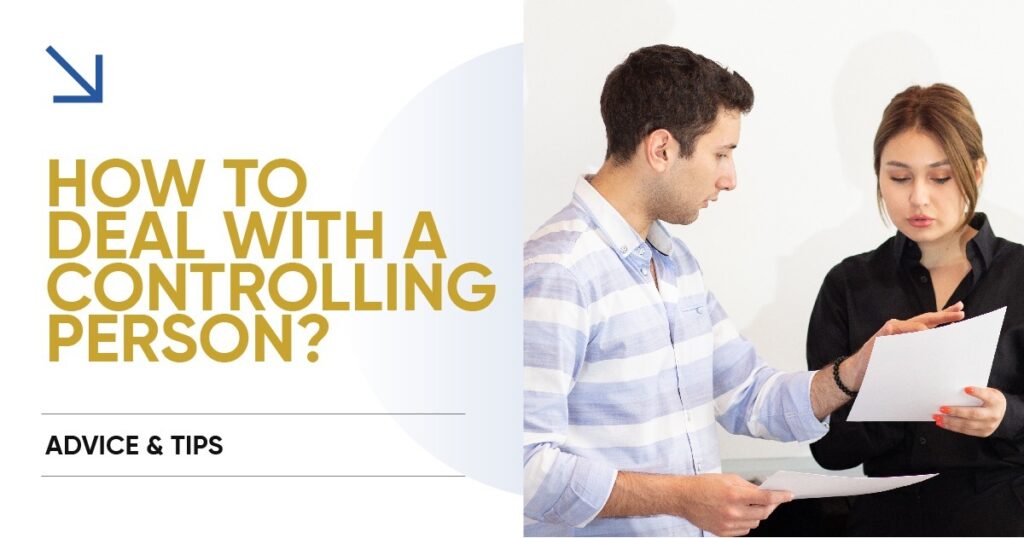
When someone in your life starts influencing your thoughts, decisions, and even your identity, whether intentionally or unintentionally, you may find yourself in a control trap. It can be a partner who never wants to take their hands off the wheel, a colleague who seems manipulative by offering their advice, or a family member who wonders about your every step: it may seem that you cannot cope with a controlling individual.
You are far from alone in this experience. It has been found that close to 30 per cent of adults report having been in a relationship where control of emotions or psychological control existed, which is a reminder that it is much easier and much more harmful to control behavior than to think it is. But there is hope. It can be regained, your limits can be restored, with intention and consciousness, and the proper equipment, to recover what you formerly possessed.
Understanding How to Deal With a Narcissist in Everyday Life
The term “controlling person” is often used loosely, but many controlling behaviors are rooted in narcissistic personality traits, such as a need for dominance, admiration, and a lack of empathy. The first step in protecting yourself is to identify these patterns in your daily life.
Recognizing the Signs of Narcissistic Personality Traits
A dominating individual (or a narcissist) may always:
- Neglect or reject your emotions (You are too sensitive).
- They need a lot of adoration or attention and become bitter when they do not receive it.
- Reaction of anger or silent treatment when things fail to go their way.
- Brag, flatter, go so far as to be generous to gain your trust, and later insidiously do you in.
- Sees things in black and white, requires loyalty and obedience.
- Pay little attention to limits, often going beyond the limits you establish.
Common Narcissistic Manipulation Tactics You Should Know
A list of the most popular tactics of narcissistic manipulation and the way they typically appear in the real world is given below:
| Tactic | What It Looks Like |
| Gaslighting | Bending the facts to make you doubt your memory, perception, or sanity. Popular expressions are I never told you that, or You are fantasizing. |
| Love-Bombing & Devaluation | Excessive affection at the start, after which the partner abruptly becomes critical, withdraws, or turns cold. |
| Guilt-Tripping | Trying to use the past favors, emotional tales, or sacrifices to make you feel owed or obligated to do what is required. |
| Emotional Blackmail | Trying to make them love, support, or be connected with you by saying that you will not do it unless they give in to you. |
| Blame Shifting / Projection | When faced with it, switch the roles and put it on yourself so that you feel guilty about their behavior or feelings. |
Narcissistic Abuse and Its Emotional Impact on Victims
Experience of staying under the influence of a narcissistic or highly controlling person may be emotionally scarring. You might experience:

- Constant anxiety or hypervigilance.
- Lack of self-worth, self-doubt, or worthlessness.
- Embarrassment, embarrassment, or even fear of defending oneself.
- Isolation, loneliness, or a broken support system.
Setting Boundaries With Narcissists Without Losing Yourself
Boundaries do not just involve rules but also statements about your dignity, values, and self. Learning to establish healthy boundaries opens the gateway to healing for many people who know how to deal with controlling persons.
Here’s how to begin:
- Figure out what is safe
- Use simple and clear language
- Always be consistent
Why Narcissistic Supply Drives Their Controlling Actions
This person is also known as controlling and tends to demand constant validation, adoration, or emotional fuel, which may be referred to as narcissistic supply. This need can manifest as:
- Always in need of recognition or notice.
- A grudge against you when you fail to admire sufficiently.
- Efforts to appropriate your time, feelings, or actions.
Leaving a Narcissistic Relationship Safely and Strategically
It may be daunting to walk out, either emotionally, physically, or mentally. To most people, it is akin to betraying one’s home. Yet there are other things to fight for, including safeguarding honor and calmness.
If you decide to leave:
- Get support – from friends and/or a therapist, counselor, or support group. Isolation is the weapon of a manipulator; connection is his opposition.
- Get ready emotionally – get prepared to experience some relief, grief, guilt, anger, sadness – all of them are acceptable. Healing works in seasons.
- Take it slow, time, have mercy on yourself.
Healing From Narcissistic Abuse and Rebuilding Your Sense of Self
Recovery takes time. Healing is not linear. Nonetheless, it can and is achievable with careful attention to oneself.
- Recognize your suffering: sorrow, rage, betrayal – give yourself time to feel and act.
- Constitute a new support: Friends, family, therapists, support groups – people who can validate, respect, and uplift you.
- Treat yourself with compassion: You are worthy of benevolence – towards yourself, and others.
- Do things of the earth: Art, movement, nature, creative expression – anything that will feed your inner being.
- Take your time: Empowerment may seem a wobbly experience initially, but with time, you will strengthen, regain clarity, and be free.
- Recommended: How to get through Narcissistic Relations: Dallas Mental Health can help you today.
Get Support Navigating Narcissistic Relationships — Contact Dallas Mental Health Today
You need not walk this path alone. We know the shadows that regulate relationships that rule at Dallas Mental Health, and we can assist in lifting them. Our caring team will be happy to walk alongside you, whether you are not entirely sure whether you are in a controlling relationship, attempting to establish limits, or you are recovering.
Contact Dallas Mental Health today and begin to recover your peace.

FAQs
1. How can I recognize controlling behavior in a partner, and what are the signs to look out for?
Behavioral control is likely to appear in the form of manipulation, perpetual criticism, tracking what you are doing, or rejecting your feelings. When you become nervous or seem frightened around someone, it is a good indication that their impact might not be healthy.
2. What strategies can I use for managing a controlling partner and maintaining personal well-being?
Create clear boundaries, speak in a direct and measured way about what will be accepted, and be consistent. You should also have a support group of your own, practice self-care, and focus on your inner well-being, no matter what transpires around you.
3. How can I effectively set boundaries with controlling individuals in a relationship?
Make your needs and feelings clear with the help of ‘I’ statements (e.g., ‘I feel unsafe when you check my messages without asking’) and implement your limits regularly, even in cases when it is hard. Boundaries are concerned with maintaining your own mental health, not punishing the other individual.
4. What are some constructive methods for confronting controlling behavior without escalating conflict?
Be calm, do not blame or accuse, and speak based on your experience with the help of ” I feel. Rather than “You always…”. If the face-to-face approach is insecure or unproductive, consider reducing contact or using a more formal form of communication.
5. When should I seek professional help to address controlling tendencies in a relationship?
When you are emotionally exhausted, nervous, sad, or feel insecure, when your setting boundaries are repeatedly unsuccessful, or when the behavior only gets worse, that is a sign to seek help. Professional care may be an effective way to validate, provide advice, and employ risk mitigation tactics to safeguard and recover.